

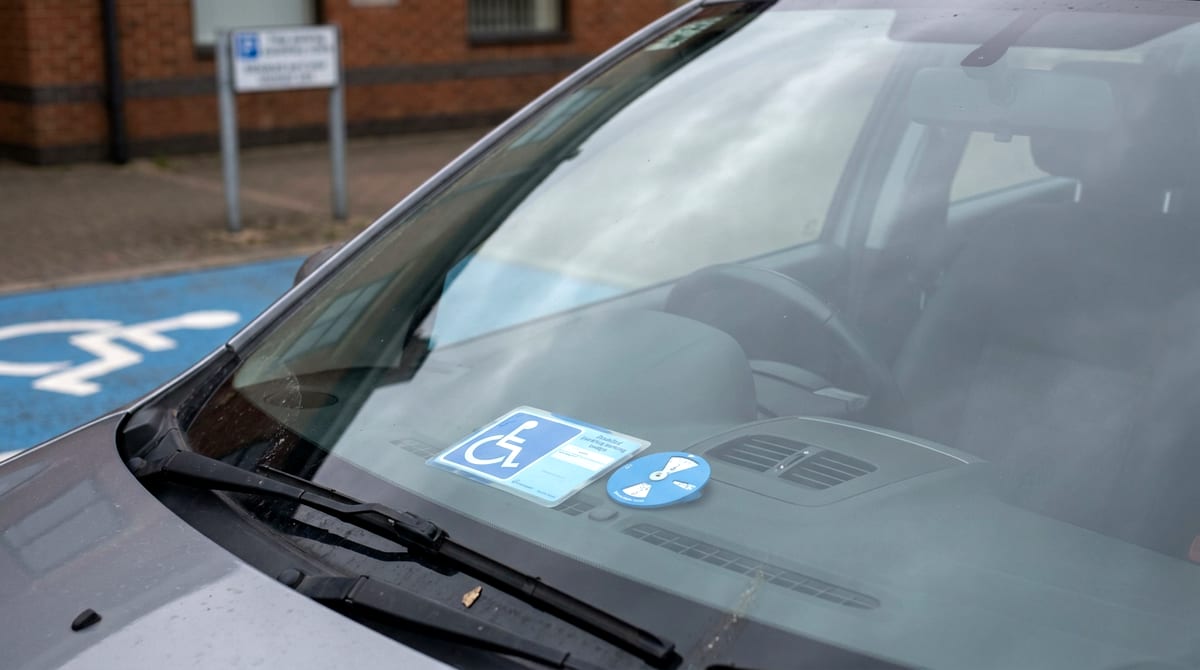
Yes, many children can get a Blue Badge. If your child receives DLA higher rate mobility they are automatically entitled, and since August 2019 children with hidden disabilities such as autism can also qualify through a discretionary assessment when their condition makes getting around or being near traffic unsafe.
Automatic entitlement
With Disability Living Allowance (DLA) higher rate mobility component, there’s no separate assessment to go through. (If your child doesn’t yet have DLA, our DLA application guide walks through the full process.)
This entitlement is set out in the Disabled Persons (Badges for Motor Vehicles) (England) Regulations 2000, as amended.
Other circumstances that grant automatic entitlement include: receiving Personal Independence Payment (PIP) mobility with 8 or more points for the “moving around” activity, receiving PIP mobility with 10 points specifically for descriptor E under the “planning and following journeys” activity, being registered blind or severely sight impaired with the local authority, or receiving War Pensioners’ Mobility Supplement.
If your child gets DLA higher rate mobility, applying is straightforward. You provide the DLA award letter as proof, and the badge is issued.
The discretionary route
Since August 2019, the rules changed to include people with hidden disabilities.
If your child doesn’t get DLA higher rate mobility but still has significant difficulty getting around, they may qualify through the discretionary route. This covers children who:
- Can’t walk or have very considerable difficulty walking due to a physical, mental, cognitive, or neurological condition
- Would be at risk of serious harm if they were near vehicles, even with supervision (for example, a child with autism who bolts towards traffic)
- Struggle severely to plan or follow a journey, or become extremely anxious or fearful in public or open spaces
The discretionary route requires an assessment, but it’s designed to capture needs that the old rules missed, particularly for children with autism, learning disabilities, and mental health conditions.
How to apply
You start the application on GOV.UK, which passes it to your local council to decide. A few councils run their own service instead, and GOV.UK sends you there.
- Proof of identity for your child
- Proof of address
- A recent photograph of your child
- DLA award letter (if applying via automatic entitlement)
- Medical evidence (if applying via discretionary route - GP letters, consultant reports, assessment summaries)
- A description of how your child’s condition affects mobility (if discretionary)
The application fee varies by council but is capped at £10, with a decision usually made within 12 weeks and the badge valid for up to 3 years before you need to reapply.
If your child is under 3, they can get a Blue Badge too if their medical condition means they must always be accompanied by bulky medical equipment they can’t carry with them, or they need to be kept near a vehicle at all times so they can be treated in it or driven quickly to treatment if needed. These badges last until the day after the child’s 3rd birthday, then you reapply.
What if you’re refused?
If your discretionary application is refused, the council should give you reasons. You can:
- Ask for an internal review - most councils offer this, though timescales vary
- Provide additional evidence and reapply
- Complain to the Local Government and Social Care Ombudsman if you believe the council didn’t follow the correct process
If your child gets DLA higher rate mobility and is refused a Blue Badge, something has gone wrong. Automatic entitlement means automatic. Contact the council and point them to the regulations.
What a Blue Badge lets you do
With a Blue Badge, you can:
- Park in Blue Badge bays (wider spaces, closer to entrances)
- Park on single or double yellow lines for up to 3 hours (where loading restrictions don’t apply)
- Park for free at most parking meters and pay-and-display machines
- Use disabled parking spaces in supermarkets, hospitals, and other private car parks
The badge belongs to your child, not to a specific car. Whoever is driving your child can display it.
Blue Badge misuse is a criminal offence under the Road Traffic Regulation Act 1984, carrying a fine of up to £1,000. The badge should only be displayed when your child is in the vehicle or being dropped off/picked up. Never use it for trips without your child.
Getting help
Citizens Advice can help you with the application and explain the discretionary criteria for your child’s specific condition.
Your local SENDIASS (Special Educational Needs and Disabilities Information, Advice and Support Service) may be able to help you gather supporting evidence, especially if your child has an Education, Health and Care Plan (EHCP) with relevant assessments.
Contact has a guide on Blue Badges for disabled children and can advise on the process.
It’s worth applying
If your child has any difficulty with mobility, whether physical or related to behaviour, safety awareness, or anxiety, it’s worth checking eligibility. The automatic route is simple. The discretionary route takes more effort but covers far more conditions.