

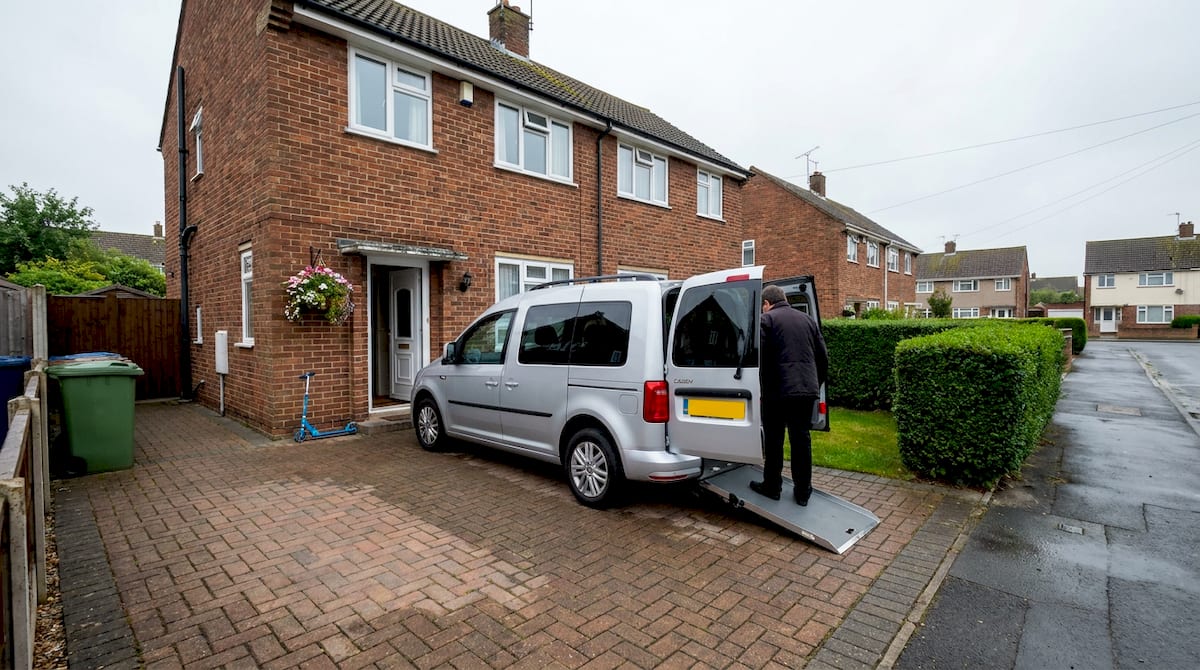
Some days you’ve loaded and unloaded the wheelchair three times before noon. You’ve hoisted the buggy into the boot, wedged the therapy kit in around it, and driven to an appointment in a car that was never really built for any of this. It works, just about, but the right vehicle would make every single one of those days easier.
If your child receives DLA higher rate mobility or PIP enhanced rate mobility, the Motability Scheme lets you lease a suitable vehicle with insurance, servicing and breakdown cover included. For many cars the whole cost is the benefit you’re already getting; some models add a one-off advance payment.
What the scheme covers
You transfer your child’s qualifying mobility benefit to Motability Operations, and in return you get a lease on a car, wheelchair accessible vehicle (WAV), powered wheelchair, or scooter.
Your qualifying mobility benefit (£80.00 per week from April 2026) goes directly to Motability Operations. The lease covers fully comprehensive insurance for up to three named drivers (one can be under 21 if they live at the same address as your child, and drivers under 25 are limited to cars in lower insurance groups), road tax, all servicing and maintenance, MOT, tyre replacement, windscreen repair, RAC breakdown cover, and end-of-lease vehicle return. You pay for fuel, charging (for electric vehicles), parking fines, and tolls. On the July to September 2026 price list, more than 30 cars are available with no advance payment; the list changes every quarter, so check the current one.
The package changed for leases ordered on or after 1 July 2026: VAT and Insurance Premium Tax now apply to most new leases, mileage is capped at 30,000 miles over a 3-year car lease (50,000 over a 5-year WAV lease), tyre replacement is limited to four damaged tyres on a 3-year lease (six on a 5-year one), and a £22 fee applies for the VE103 certificate needed to take the vehicle to Europe. If you’re already leasing, none of this touches you: existing leases carry on under the old terms.
Who qualifies
For disabled children and young people, two benefits open the Motability Scheme:
| DLA Higher Rate Mobility | PIP Enhanced Rate Mobility | |
|---|---|---|
| Weekly amount (2026-27) | £80.00 | £80.00 |
| Scheme access | Full access | Full access |
| Minimum award remaining | 12 months | 12 months |
| Child age minimum | 3 years old | 16+ (PIP starts at 16) |
Standard rate mobility (DLA lower or PIP standard) doesn’t qualify. Nor do Attendance Allowance, Carer’s Allowance, or DLA care at any rate. (A few other allowances open the scheme for adults, such as the Armed Forces Independence Payment and the War Pensioners’ Mobility Supplement, but they don’t apply to children.)
For children under 16, you apply on behalf of your child. Your child is the “customer” (the benefit recipient), and you’re the nominated driver. You can add up to 3 named drivers, which is useful if more than one person does the school and appointment runs.
Advance payments
Some vehicles require a one-off upfront payment, ranging from £0 to over £10,000 depending on the model. Standard cars are leased for 3 years. Wheelchair accessible vehicles (WAVs) have a 5-year lease and typically require an advance payment. If that figure looks daunting, grants from the Motability Foundation can help cover it, so it’s worth asking before you rule a vehicle out.
Vehicle adaptations
If your child needs adaptations, many are available at no extra cost through the scheme as long as they’re fitted when you order the vehicle:
- Wheelchair stowage solutions
- Hand controls and left-foot accelerators
- Hoists (person or wheelchair, subsidised through Motability Foundation grants)
- Specialist seating
For adaptations not covered as standard, you can apply for a grant from the Motability Foundation. These are means-tested and assessed individually, but they exist precisely for situations like this.
The biggest risk: reassessment
The Motability lease depends entirely on your child’s mobility benefit. If the benefit is reduced or removed at reassessment, the lease ends. That’s the hardest thing about the scheme, and it’s worth knowing about upfront.
What happens at the DLA-to-PIP transition at 16
The highest-risk moment is the DLA-to-PIP transition at age 16. The assessment method changes, the criteria change, and you might come out of it with a lower award. Your child’s needs haven’t changed. The system has.
- PIP invitation arrivesDLA continues. No immediate impact on Motability.
- PIP claim submittedDLA continues throughout assessment. Motability lease continues.
- PIP Enhanced Mobility awardedMotability transfers seamlessly from DLA to PIP.
- PIP Standard or nil awardedMotability lease terminates. 8-week return period begins.
This is why the PIP reassessment is the moment that matters most for your Motability lease.
If you lose your mobility award and appeal to the tribunal, the standard position is that the vehicle goes back: you must normally return it within the 8-week period even if your tribunal is pending, so plan for alternative transport during what can be a 3 to 9 month wait for a hearing, according to gov.uk. If your challenge is still undecided as the deadline approaches, contact Motability to discuss your options, but don’t count on keeping the vehicle.
Protecting your lease at reassessment
Start preparing 6 months before the reassessment. Gather updated medical evidence from all treating professionals. Update your mobility diary with specific, dated examples and photograph the adaptations in the vehicle showing daily use. When you’re completing the PIP2 form, focus on worst-day difficulties and describe what happens without help rather than with it. The assessor can only act on what you tell them.
If PIP is awarded at a lower rate, request a mandatory reconsideration (MR) within 1 month. If that fails, appeal to the tribunal within 1 month of the MR decision. Tribunal success rates for PIP appeals are around 65-70%, according to official DWP statistics.
Submit the mandatory reconsideration as fast as possible after an adverse decision. Motability doesn’t guarantee to keep the vehicle with you during the MR, but if your challenge is taking longer than the timescales you were given, contact them before the 8-week deadline runs out and ask about your options.
When the lease ends
If you lose your qualifying benefit and return the vehicle, there are a few things worth knowing:
- A Good Condition Payment of up to £250 (3-year lease) or £350 (5-year lease) is paid if the vehicle is in acceptable condition
- The Motability Foundation may provide a transitional support payment if you joined the scheme in 2013 or earlier and lose eligibility at reassessment: up to £2,000 if you joined before 2013, or £1,000 if you joined during 2013, paid when the vehicle is returned in good condition within 8 weeks (smaller payments apply if you keep it up to 26 weeks). If you joined from 2014 onwards, which is almost everyone reading this, there’s no fixed payment, but you may get a pro-rata refund of your advance payment
- You can rejoin the scheme immediately if your benefit is later reinstated, but you’ll need a new advance payment
Getting help
Motability Operations (0300 456 4566) handles scheme queries, applications, and lease issues.
Motability Foundation provides grants for adaptations and transitional support.
Contact (0808 808 3555) advises on benefit entitlements and Motability guidance for families.
Citizens Advice can help with benefit appeals if your mobility award is reduced.
It’s worth looking into
If your child receives higher rate or enhanced rate mobility, the scheme gives you a reliable vehicle without the usual scramble to insure, tax, and maintain it separately. Insurance alone for a family with a young disabled child can be expensive, and Motability bundles most of that cost into the lease.
Visit a Motability dealer to see what’s available. You can find one at motability.co.uk.