

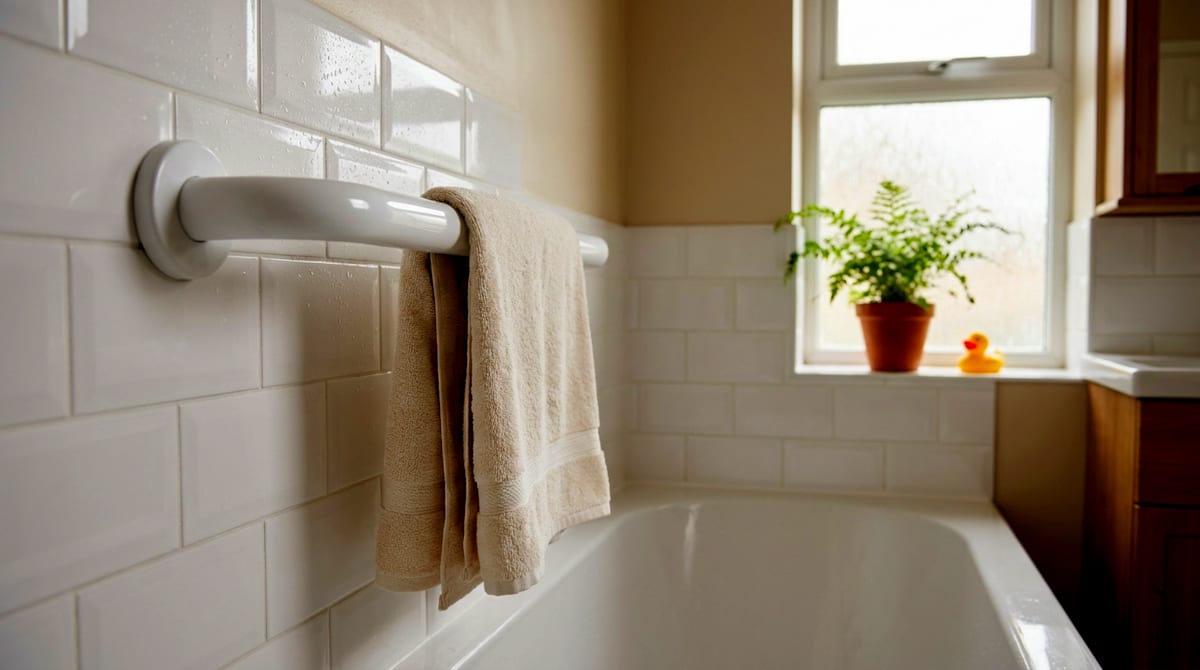
Your child needs a wet room. Or a ramp. Or the doorways widened for a wheelchair. Or a stairlift so they can get to their bedroom. These aren’t luxuries. They’re basics that make your home work for your family.
The Disabled Facilities Grant (DFG) is a council grant of up to £30,000 to pay for essential home adaptations. This is a grant, not a loan you repay in instalments. Owner-occupiers can be asked to repay part of a grant over £5,000 if they sell within 10 years (details under ‘Who can apply’ below). And for a disabled child or young person under 19 for whom Child Benefit is payable, there’s no means test at all, which means your income and savings don’t matter.
It’s also mandatory. If your child meets the criteria, the council must approve the grant. They can’t refuse because they’ve run out of budget.
What it pays for
The DFG covers adaptations that are recommended by an occupational therapist (OT) and fall within the mandatory purposes set out in the Housing Grants, Construction and Regeneration Act 1996. For equipment that doesn’t require structural work, such as specialist wheelchairs or communication aids, speak to your child’s occupational therapist or social care team about other funding routes.
- Access to the home - Ramps, handrails, level access, door widening, path improvements
- Bathroom adaptations - Wet rooms, level access showers, adapted baths, accessible toilets, wash basins
- Bedroom access - Stairlifts, through-floor lifts, ground floor bedroom extensions
- Kitchen modifications - Lowered worktops, adapted taps, accessible cupboards and appliances
- Safety adaptations - Specialist lighting, door entry systems, monitoring equipment
- Heating improvements - Heating systems suitable for the child’s needs
- Power and controls - Accessible switches, outlets, and controls throughout the home
The key test is whether the adaptation makes the home safe and accessible for the disabled child. The OT assessment determines what’s needed, and the grant covers what the OT recommends.
No means test for children
This is one of the most important facts about the DFG that many families don’t know. When the disabled person is a child or young person under 19 for whom Child Benefit is payable, the council must assume their income doesn’t exceed the applicable amount.
| Children under 19 | Adults 19+ | |
|---|---|---|
| Means test | None | Standard means test |
| Parents’ income assessed | No | N/A (adult’s own income) |
| Parents’ savings assessed | No | N/A (adult’s own savings) |
| Contribution required | None | May be required |
This means the full grant amount, up to £30,000, is available regardless of how much you earn or have in savings. It’s a crucial protection for SEND families.
If the council asks about your income when your child is under 19, they are wrong. The means-test exemption is set out in law. You don’t need to provide payslips, bank statements, or benefit information. The only financial information needed is the cost of the adaptations.
How to apply
The application process has several stages, and the biggest delays typically come from waiting for the OT assessment.
- Contact the councilPhone your council’s housing or social services department and request a DFG or OT referral.
- OT assessmentAn occupational therapist visits your home, assesses your child’s needs, and recommends specific adaptations.
- Submit applicationComplete the council’s DFG application form with OT report, at least two contractor estimates, and property documents.
- Council decisionThe council has 6 months from your application date to issue a decision.
- Works completedApproved contractors carry out the adaptations. Must be finished within 12 months of approval.
- Grant paidPayment goes directly to the contractor or to you on completion.
Getting the OT referral is the first and most important step. You can request a referral through the council’s social services or children’s disability team, through your GP or paediatrician, or by self-referring if your area accepts direct referrals. If you haven’t had a social care assessment yet, our guide to parent carer assessments and your rights explains how to ask for one alongside the DFG process.
If you’re in a two-tier area (a county with district or borough councils underneath it), these can be two different councils: the county council’s children’s services usually arranges the OT assessment, but the DFG application itself goes to your district or borough council, the housing authority. In a unitary authority, it’s the same council for both, so this won’t come up.
Don’t start any adaptation work before the grant is formally approved. Section 29 of the Housing Grants, Construction and Regeneration Act 1996 bars approval where works have already begun. This is the single most important rule to follow.
What you’ll need for the application
The council will ask for several documents. Having these ready speeds up the process:
- the occupational therapist’s assessment report
- at least two itemised contractor quotes
- proof of ownership or tenancy (title deeds, Land Registry entry, or tenancy agreement)
- written landlord consent if you rent
- sketch plans of the proposed adaptations
- planning permission or building regulations approval if applicable to your works
Getting these gathered before you submit the application makes the council’s assessment quicker.
Realistic timelines
The statutory deadline for a council decision is 6 months. In practice, the full process from OT referral to completed works often takes much longer. A typical smooth process runs 9 to 14 months. Complex adaptations or councils experiencing delays can easily extend to 18 months or more. Research by the disability charity Leonard Cheshire, based on Freedom of Information responses from 180 councils across England, found 48% had missed the statutory 6-month decision deadline at least once, 67% had disabled residents waiting more than 12 months for approved adaptations to be completed, and 23% reported waits of more than two years. The OT waiting list is the most common bottleneck.
To speed things up: Chase the council regularly. Ask for a named officer. Get two contractor quotes ready in advance. Follow up every phone call with a written email summary. And keep a log of every contact with dates and names.
If the cost exceeds £30,000
Average children’s adaptation claims cost around £58,000, according to data from Foundations (the national body for home improvement agencies). The £30,000 cap hasn’t been increased despite rising construction costs.
If your child’s adaptations cost more than £30,000, the council has discretionary powers to award additional funding under the Regulatory Reform (Housing Assistance) Order 2002. This isn’t guaranteed and varies by council, but it’s always worth asking.
You can also contact Family Fund for supplementary grants for families on low incomes raising disabled children. If your child has a social care package, direct payments can be used alongside a DFG to fund additional support or minor adaptations the grant doesn’t cover.
If the council refuses or delays
The DFG is a mandatory grant. The council can’t refuse an eligible application on the grounds of lack of resources. If they try, you have several options.
Request written reasons. The council must explain why they’ve refused.
Challenge the decision. Cite the statutory criteria and the mandatory nature of the grant under the Housing Grants, Construction and Regeneration Act 1996.
Formal complaint. Use the council’s complaints procedure. Include all evidence.
Ombudsman referral. If the council’s process was flawed or the decision unreasonable, escalate to the Local Government and Social Care Ombudsman. LGSCO decisions confirm that unreasonable delay in DFG processing constitutes maladministration.
Who can apply
The DFG is available regardless of whether you own or rent your home.
- Owner-occupied properties - Apply directly
- Private rented properties - With landlord’s written consent
- Housing association properties - With landlord’s written consent
- Council tenancies - Apply through the council
If you own your home and the grant is £5,000 or more, the council can register a local land charge and ask for part of it back (up to a maximum of £10,000) if you sell the property within 10 years of the work finishing. They have discretion to waive this, for example if you need to move to more suitable housing. This doesn’t apply if you rent.
If you rent, your landlord can’t unreasonably refuse consent for adaptations funded by a DFG. If they refuse, explain that the grant covers the full cost and may increase the property’s value.
Getting help
Contact (0808 808 3555) provides free advice for families of disabled children, including housing adaptations and DFG applications.
Foundations is the national body for home improvement agencies in England. They can help you find local agencies that support DFG applications.
Citizens Advice can help with DFG applications and complaints if the council delays or refuses.
Your child deserves a home that works
A DFG is a legal entitlement, not charity. Your child has a right to access their own home safely and independently, and the council has a legal duty to fund the adaptations that make that possible.
If your child needs a ramp, a wet room, a stairlift, or a ground floor bedroom, start the process today. Contact your council, request the OT referral, and don’t let bureaucratic delay stop your family getting what it needs.