

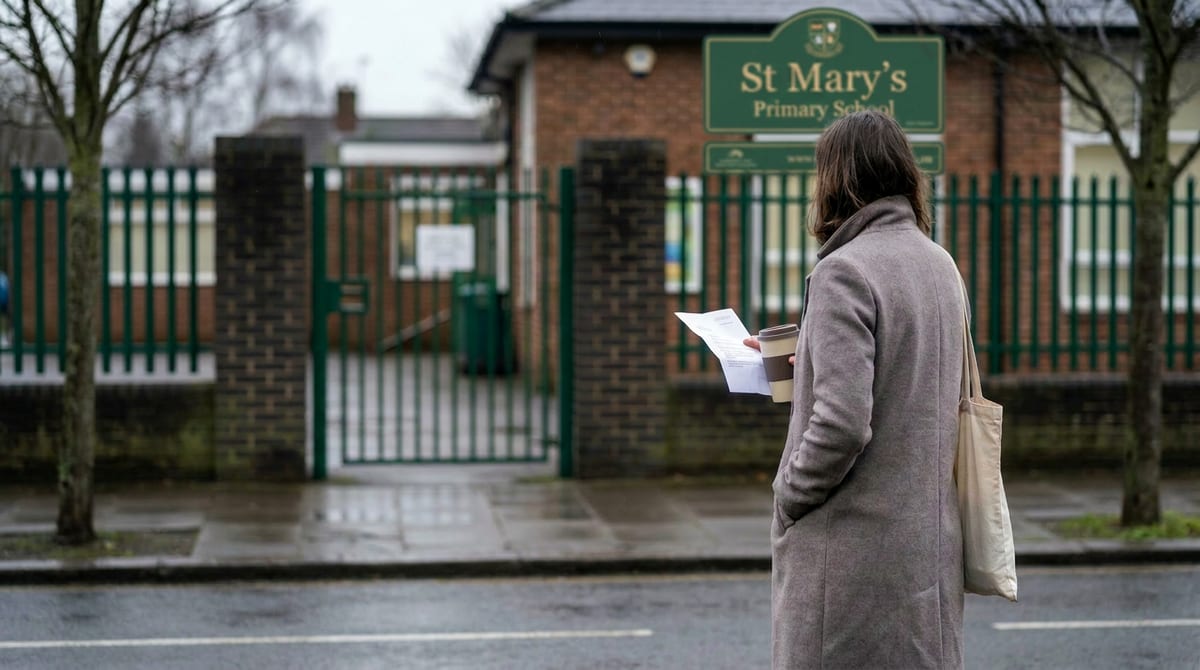
The phone call from school. “We need you to come and pick up your child.” You’ve heard it before. Maybe it happens every week.
Sometimes it’s a formal suspension. Sometimes it’s just the school asking you to take them home. Sometimes they call it “a reduced timetable for their wellbeing.”
Whatever they call it, exclusions hit SEND families harder than anyone else. Children on SEN support are permanently excluded six times as often as children with no identified SEN, and suspended more than four times as often, according to the Department for Education’s 2024/25 exclusions data. And many of those exclusions are unlawful.
Types of exclusion
There are three types of exclusion, and only two of them are legal.
Suspension (previously called fixed-term exclusion) is when the school removes your child for a set number of days. The headteacher must follow the formal process, provide paperwork, and tell you about your rights. Maximum 45 school days per academic year.
Permanent exclusion is when the school removes your child for good. This is a serious step with significant procedural requirements, including a governors’ meeting and your right to make representations.
Informal exclusion is when the school sends your child home without following the formal process. No paperwork. No rights. No record. This is always unlawful, regardless of the circumstances.
What makes an exclusion lawful:
- Formal suspension with paperwork and written reasons is lawful if procedures are followed
- Permanent exclusion with a governors’ review offered is lawful if procedures are followed
- “Can you come and pick them up?” without formal paperwork is unlawful informal exclusion
- Reduced timetable imposed without your agreement may be unlawful
- “We think they’d be better off at home today” is unlawful informal exclusion
The paperwork matters because it proves what happened and protects your rights.
If the school asks you to collect your child and doesn’t give you a formal suspension letter with the date, reason, and your rights, this is an informal exclusion. It’s unlawful even if you agree to it. Record every instance.
The duty to make reasonable adjustments
Under the Equality Act 2010, schools must make reasonable adjustments for disabled pupils. This duty applies before, during, and instead of exclusion.
If your child’s behaviour is linked to their disability, the school must consider what adjustments could prevent exclusion. This sits alongside the school’s broader duty to provide support under the SEND Code of Practice, which is set out in detail in our guide to what schools should be doing for SEN pupils. Examples of adjustments:
- A sensory room or quiet space for a child who becomes overwhelmed
- A modified behaviour policy that accounts for ADHD impulsivity
- A visual timetable and transition support for a child with autism
- Alternative supervision during unstructured times like lunch
- A planned exit strategy when things are escalating
If the school excludes your child for behaviour that’s a direct consequence of their disability, and they haven’t made reasonable adjustments, the exclusion may amount to disability discrimination.
The key question isn’t whether your child’s behaviour was disruptive. It’s whether the school did everything reasonable to prevent the situation from reaching that point.
What to do if your child is formally excluded
When your child receives a formal suspension or permanent exclusion, the school must:
- Give you a written letter explaining the reason, the length (if fixed-term), and your rights
- Arrange suitable full-time education from the sixth school day of suspension onwards (if more than 5 school days)
- Invite you to a governors’ meeting (for permanent exclusions, or suspensions over 15 school days)
You have the right to:
- Make representations to the governing body
- Request an Independent Review Panel if the governors don’t reinstate your child
- Have someone accompany you to meetings (SENDIASS can attend with you)
- Exclusion happensSchool must provide written notice with reasons and your rights.
- First 5 school daysSchool may set work. You’re responsible for your child during school hours.
- Day 6 onwardsFor a suspension, the school must arrange full-time alternative education; for a permanent exclusion, the local authority must.
- Governors’ meetingFor permanent exclusions: governors must meet within 15 school days.
- Independent Review PanelIf governors uphold permanent exclusion, you can request an IRP.
Independent Review Panels
If your child is permanently excluded and the governors uphold the decision, you can request an Independent Review Panel (IRP). The IRP reviews whether the exclusion was fair, procedurally correct, and took account of your child’s SEN.
The IRP can:
- Uphold the exclusion
- Recommend that the governors reconsider
- Direct the governors to reconsider (if the exclusion was procedurally flawed)
You can also ask for a SEN expert to attend the panel, whether or not the school has formally recognised your child’s SEN. The expert advises on whether the school had regard to the SEND Code of Practice and made reasonable adjustments.
Always request the SEN expert if your child has SEND. The expert is free, independent, and can highlight where the school failed to meet its duties. There’s no downside to having one present.
Disability discrimination claims
If your child’s exclusion is linked to their disability and the school failed to make reasonable adjustments, you can bring a disability discrimination claim to the SEND Tribunal. Our guide to disability discrimination at school covers what counts as discrimination and how to build your case.
You have 6 months from the discriminatory act to file a claim. This is separate from the exclusion review process and can run alongside it.
The tribunal can:
- Declare that discrimination occurred
- Order the school to take specific steps, including reinstatement for a permanent exclusion
It can’t award financial compensation, even where the discrimination caused real harm.
Informal exclusions: what to do
If the school is sending your child home without following the formal process, this sometimes appears alongside other refusals to provide proper support. If the school is also blocking SEN provision more broadly, our guide to what to do when a school refuses to help your SEND child covers the escalation routes.
- Keep a record of every instance: date, time, who called you, what they said, whether paperwork was provided
- Write to the headteacher stating that informal exclusions are unlawful under DfE guidance, and that any future removals must follow the formal suspension procedure
- Contact the governors if it continues
- Report to the local authority - the LA has oversight duties and should intervene
- Contact your SENDIASS for support and advice
Disability discrimination claims must be filed within 6 months of the incident. If informal exclusions are happening regularly, each instance is a separate potential claim.
Getting help
Your local SENDIASS can attend governors’ meetings and IRP hearings with you, help you prepare your case, and advise on your options.
IPSEA provides free legal advice on exclusions, disability discrimination, and the IRP process.
Coram Children’s Legal Centre offers advice on education law including exclusions.
Your child has rights
Exclusion should be a last resort, not a first response. If your child has SEND and is being excluded regularly, the school should be asking what it needs to change, not removing your child from the building.
Record everything. Know your rights. And don’t accept informal exclusions, ever. They’re unlawful, and the school knows it.