

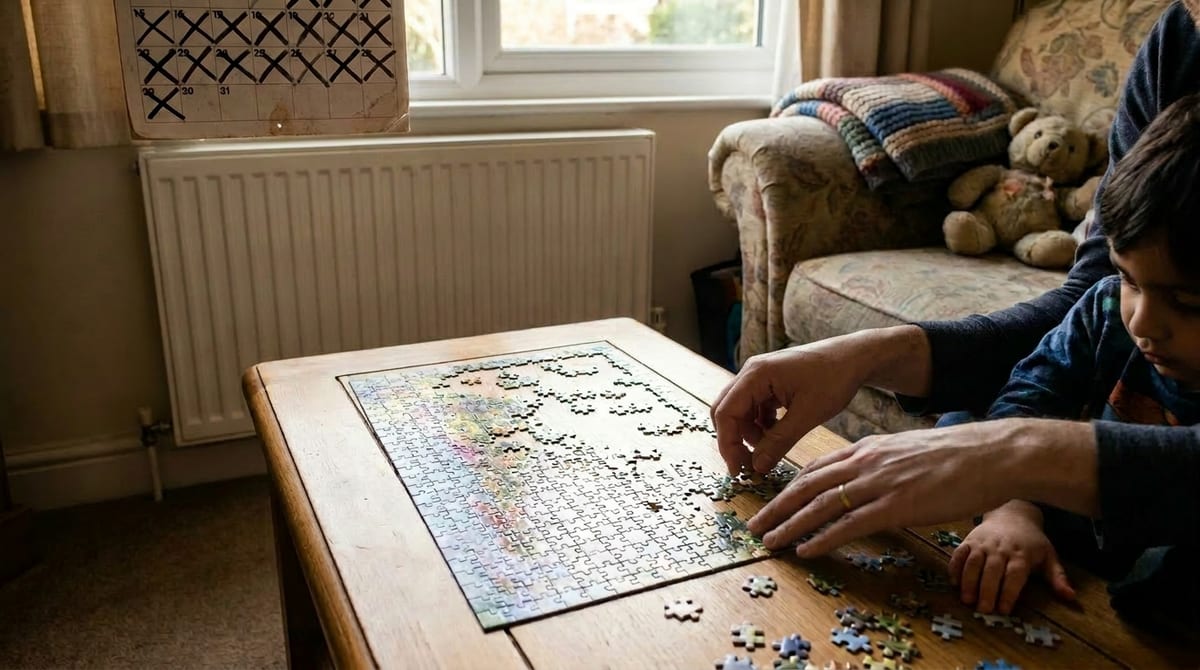
Your child was referred to CAMHS. You were told the wait would be “a few months.” Months turned into more months. The anxiety got worse. School became harder. And the referral just sat there.
You’re not imagining it. The waiting times are genuinely that bad. But your child keeps rights while they wait: if they have an Education, Health and Care Plan (EHCP), mental health provision written into it stays legally enforceable regardless of the queue, and school mental health teams, your GP, and crisis routes can step in without a diagnosis or a CAMHS referral.
The scale of the problem
The numbers are difficult to read. But they matter, because they show this isn’t your family’s problem alone.
The number of children waiting more than a year rose by 52% year-on-year. In 2022/23, 39% of referrals (372,800 of them) were closed before treatment even started. Some of those were appropriate. Many were not. The system is under extreme pressure, and children are falling through the gaps.
These statistics cover all CAMHS referrals across England. Your local area may be better or worse than the national average. Contact your local NHS Trust or ICB to ask about current waiting times for your specific referral. The only CAMHS referrals with a national waiting-time standard are eating disorders (seen within 4 weeks routine, 1 week if urgent) and early intervention in psychosis for ages 14 and over (2 weeks); these are NHS operational targets, not personal legal guarantees, and most other CAMHS referrals have no equivalent standard at all.
What your child is entitled to while waiting
Being on a waiting list doesn’t mean your child gets nothing. Several support pathways exist alongside CAMHS, and some carry legal weight.
EHCP Section G provision. If your child has an Education, Health and Care Plan (EHCP), mental health provision can be specified in Section G. Once it’s written into the plan, the Integrated Care Board (ICB) is legally obliged to arrange it. This is separate from the CAMHS waiting list. The ICB must deliver what the plan specifies regardless of general waiting times.
Under Section 21(5) of the Children and Families Act 2014, mental health provision that “educates or trains” a child is treated as special educational provision and goes in Section F of the EHCP, making the local authority responsible. Other mental health provision goes in Section G. (What each section of an EHCP is for.)
| Section F (LA responsible) | Section G (ICB responsible) | |
|---|---|---|
| Applies when | Mental health provision educates or trains | Other mental health provision |
| Example | Therapeutic interventions supporting learning | Clinical psychology, psychiatric assessment |
| Who delivers | LA arranges via education budget | ICB arranges via health budget |
| Legal enforceability | Fully appealable at SEND Tribunal | ICB legally obliged to deliver |
School Mental Health Support Teams (MHSTs). Over 700 MHSTs now operate in almost 11,800 schools and colleges across England, reaching nearly 6 million children and young people, including nearly 80% of secondary school pupils. These teams provide early intervention for mild-to-moderate difficulties. They’re not a replacement for CAMHS, but they can provide support while your child waits.
Ask your child’s school whether they have access to an MHST. If they do, request a referral directly through the school Special Educational Needs Coordinator (SENCO) or pastoral team.
You don’t need a CAMHS referral or a diagnosis for your child to access an MHST. These teams work with children showing early signs of difficulty and can provide evidence-based interventions while you wait for specialist assessment.
Crisis pathways
If your child is in crisis, you don’t wait. There are immediate pathways:
- NHS 111 (mental health option) - Call 24/7 for urgent mental health concerns that aren’t immediately life-threatening
- 999 or A&E - Go to A&E or call 999 for immediate danger to life
- Crisis text line - Text SHOUT to 85258, available 24/7 for support by text message
- Local CAMHS crisis team - Available via referral or NHS 111 for urgent specialist assessment
If your child’s mental health deteriorates significantly while waiting for CAMHS, contact your GP. Ask them to escalate the referral as urgent. Document the deterioration with specific examples, dates, and impacts.
GP bridging support
Your GP can do more than just refer. While your child waits for CAMHS, the GP can provide interim support.
Review medication if your child is on any relevant prescriptions. Provide fit notes for school if anxiety or mental health is preventing attendance. Refer to local voluntary sector services that often have shorter waiting times. Write supporting letters for EHCP assessments or annual reviews.
If your GP says “you just need to wait for CAMHS,” push back. Ask what interim support is available locally. Ask about any voluntary sector mental health services for young people in your area. And ask the GP to document that your child is waiting and that their condition is affecting their daily life.
If the referral is refused
Sometimes CAMHS referrals are rejected at the triage stage. If this happens to your child, you have rights.
Request written reasons. Ask the service to explain in writing why the referral was refused. This is your first step and creates a paper trail.
Re-refer via a different route. Ask a different professional to refer your child. If the school referred, ask your GP. If the GP referred, ask the school. A second referral from a different source can succeed where the first didn’t.
If those steps do not resolve it, the formal NHS complaints route applies, from PALS through to the Parliamentary and Health Service Ombudsman, and the NHS complaints process section below sets out each step.
A refused CAMHS referral doesn’t mean your child’s needs aren’t real. It usually means the service is overwhelmed and applying strict criteria to manage demand. If you believe the decision is wrong, challenge it. Keep records of everything.
CAMHS and the EHCP
If your child has an EHCP or you’re applying for one, the CAMHS waiting time is directly relevant. Mental health needs can and should be reflected in the plan.
During EHC needs assessment: The LA must seek health advice as part of the assessment. If CAMHS hasn’t seen your child yet, the assessor should still gather evidence of mental health needs from the GP, school, and any other professionals involved.
At annual review: If mental health needs have changed or new concerns have emerged, raise them. Request that Section G is updated to include specific mental health provision. Once specified, the ICB must arrange it.
If the EHCP doesn’t include mental health provision: Request an annual review specifically to address this gap. Provide evidence from the GP, school, or any private professionals. The absence of a CAMHS assessment doesn’t prevent mental health provision being written into the plan.
An EHCP is one of the most powerful tools for getting mental health support. Once provision is specified in Section G, the ICB must deliver it. That obligation exists regardless of CAMHS waiting lists.
NHS complaints process
If waiting times are causing your child harm and the service isn’t responding, use the formal complaints route.
Step 1: Contact PALS (Patient Advice and Liaison Service) at the NHS Trust. This is informal but often effective.
Step 2: Submit a formal complaint to the NHS Trust’s complaints team. You have 12 months from the event, or from when you became aware of the problem if that’s later, to lodge one. Include specific details about waiting time, impact on your child, and what you’ve already tried.
Step 3: If the response is unsatisfactory, escalate to the Parliamentary and Health Service Ombudsman (PHSO) at ombudsman.org.uk.
Cite NICE guidelines (NG134 for depression, CG159 for social anxiety disorder) when challenging inadequate provision. These are evidence-based standards that NHS services must follow.
Getting help
YoungMinds Parents Helpline (0808 802 5544, Monday to Friday 9:30am-4pm, open until 6pm on Tuesdays and Wednesdays) provides free support for parents and carers worried about their child’s mental health, including advice on navigating CAMHS.
Mind offers information, legal advice, and advocacy for mental health concerns.
IPSEA can advise on getting mental health provision written into an EHCP.
Waiting is not a plan
A waiting list is not treatment. Your child’s needs don’t pause because the system is overloaded. While you wait for CAMHS, make sure every other available support is in place.
Check whether your child’s school has an MHST. Ask your GP for interim support. If your child has an EHCP, get mental health provision specified in Section G. And if your child is in crisis, use the crisis pathways immediately.
The waiting times are unacceptable. But you don’t have to accept doing nothing while the clock runs.